CASE STUDY
Vanta AI

COMPANY
Vanta
MY ROLE
Lead Product Designer, Vanta Agent
TIMELINE
April – May 2026
PROJECT OVERVIEW
At a pivotal AI moment for Vanta, I helped turn fragmentation into a system: one design language for the agent, proven by product teams in weeks and scaled into platform features that grew agent usage 30%.
Current state
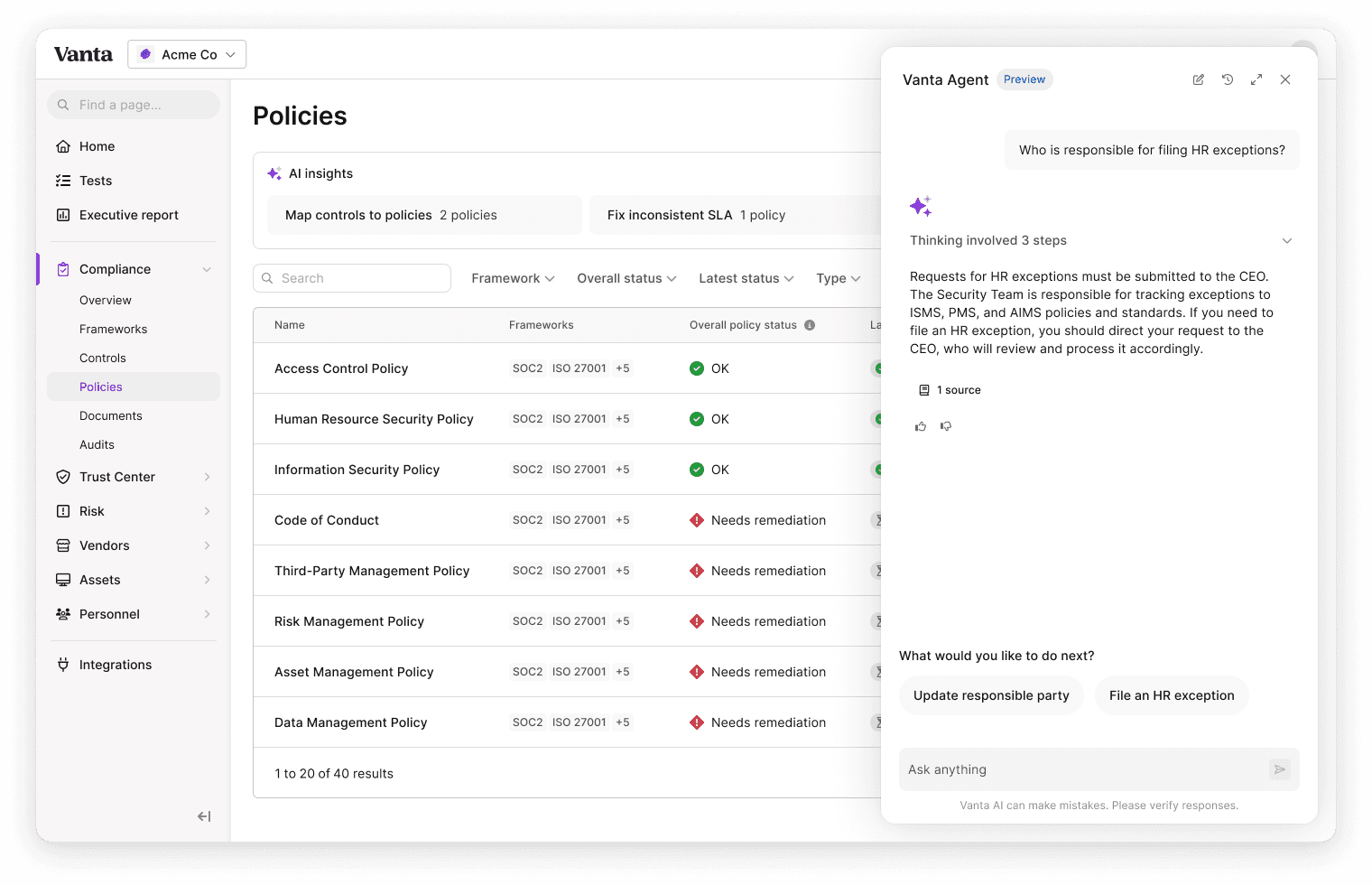
Vanta was at an inflection point: working out how AI should fit into the existing product, and moving fast enough to deliver a high-craft experience. A basic chatbot already existed, and AI-generated content appeared across the product with its own icons, colors, and disclosures. Without shared patterns, vocabulary, or an artifact system, every team was free to solve the same problems its own way.
Screenshot of the existing chatbot, which was very contained to one product area. As frontier models got better, this needed to evolve to better meet expectations.
The opportunity
The agent-first vision was clear: chat, canvas, and artifacts working as one experience. But six teams were designing it independently, with conflicting terminology and quarterly deadlines. The opportunity was to turn that vision into shared patterns and language that teams could use immediately, creating a coherent experience without slowing them down.
APPROACH
Act 1: Align
I co-planned and co-facilitated a week-long design sprint with about a third of the design team, plus engineering and research, organized with less than a week’s notice and with leadership buy-in to protect the focus time. I met with each team’s designer beforehand, then ran a workshop mapping their user journeys to the patterns they’d need.
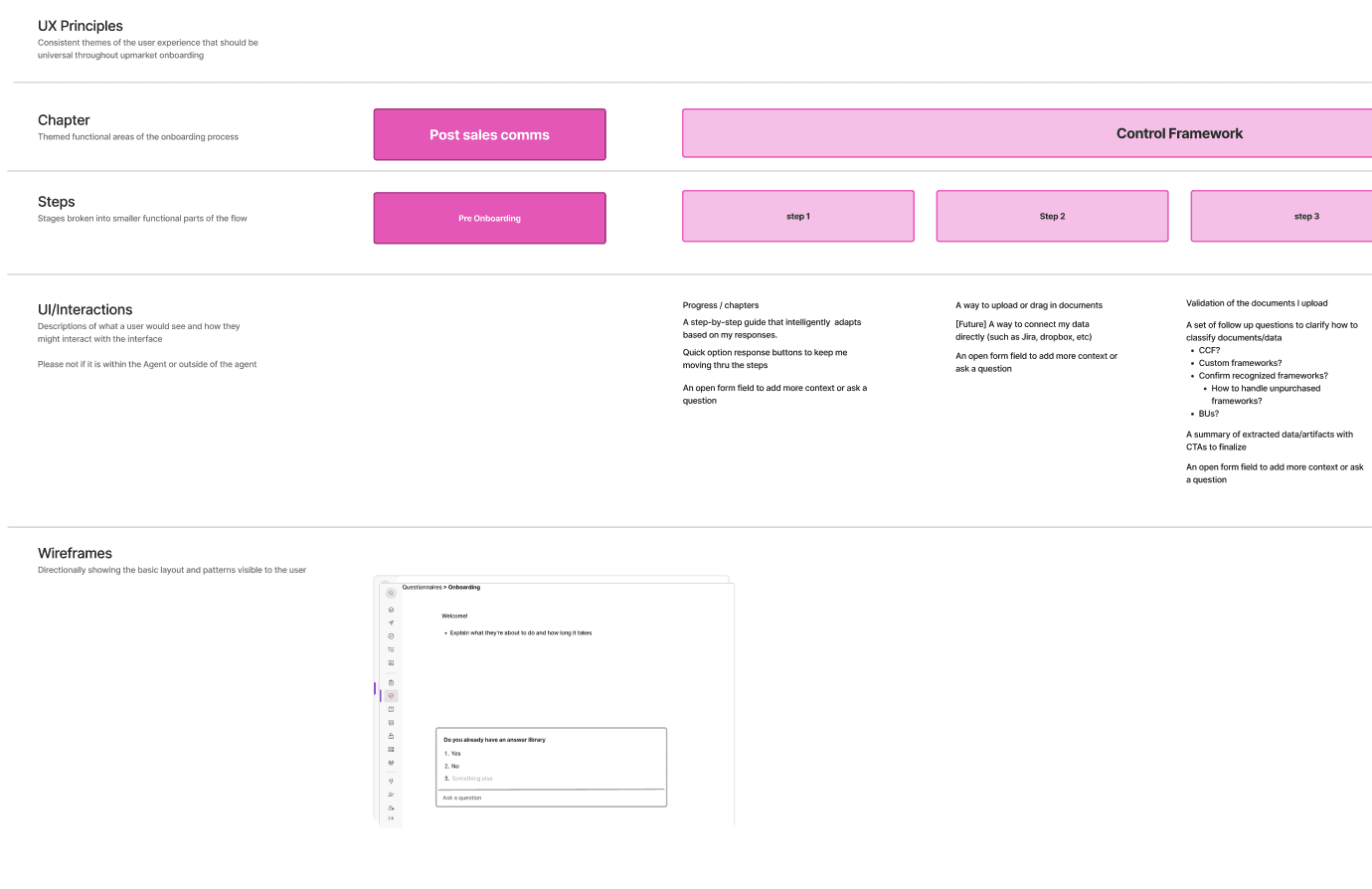
I also owned the agent glossary, a shared vocabulary for surfaces, concepts, and how the agent carries out work.


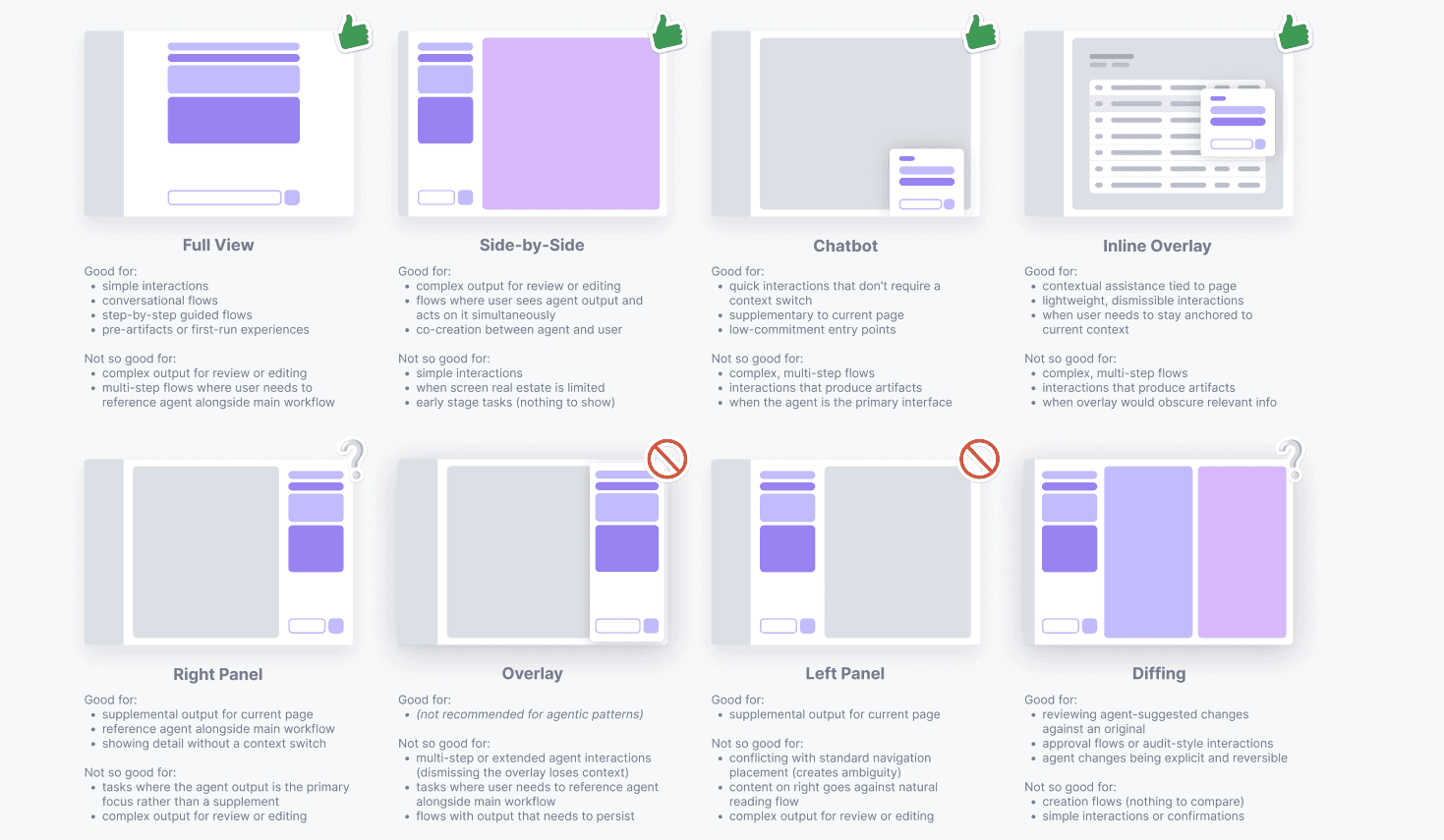
Together, we converged on core principles: chat for steering and a canvas for editing, artifacts as designed templates rather than freeform output, the agent proactively guiding the user, and no empty states.
Guidelines that I created and presented:
One component I focused on crafting was the chat artifact. I also worked through several design challenges while designing it.
How should these scale? What if you’re generating a list of a thousand items in the chat? How should pagination look?
How do we handle data tables and experience? One of the specific projects that we were supporting was an import flow where customers were migrating to Vanta using giant spreadsheets.
After many rounds of iteration during the sprint, we landed on a system that included several artifact types, along with interaction guidance.


I also co-designed a reusable flow for importing complex spreadsheets. The chat canvas lets users map content to Vanta.

Act 2: Prove
Patterns only matter if they survive real work. I embedded with the activation team for two weeks to apply them to the agentic getting-started flow, answered engineering questions daily, and led usability testing. When testing showed users weren’t filling out the form beside the agent, we added autosave, then explored removing the form entirely and improving the AI so there were no blanks to fill.
Prototype that we tested
Revisions:

Summary of research with recommended pattern changes:

I focused on crafting artifacts: components that represent Vanta objects in the chat experience, such as policies and compliance controls.
Act 3: Scale
With the patterns in use, I was able to focus back on my core team’s roadmap.
I came across several design challenges while designing this.
I prototyped the agent’s next two months of capabilities, including skills, background tasks, and connectors, as one connected experience. I gathered input across product areas and broke the vision into projects engineering could start building right away.
From this prototype, we ended up choosing background tasks as one of our first projects.
This lets users move work forward across multiple chats without staying in each conversation. By allowing conversations to continue in the background and making progress, completion, and requests for input visible, we aimed to reduce the effort of monitoring ongoing work. This is especially helpful for longer tasks that may take a few minutes.
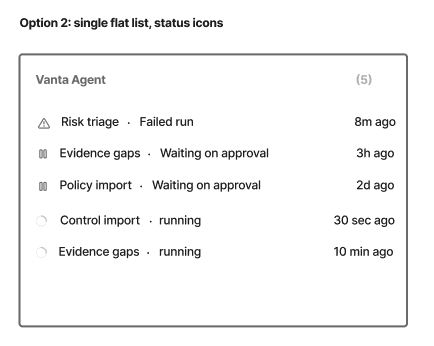
Below are different design explorations as we honed the details.
Motion exploration for running agents


Design iterations


Outcome
Final design: lightweight signals for background work
We launched background task indicators as a small but persistent system cue: a pulsing dot appeared both in navigation and beside individual chat titles, so users could tell when an agent was still working without needing to stay inside the conversation.

The indicator was intentionally sparse and color-coded by intent. Gray created ambient awareness that work was happening in the background, while purple signaled that the agent needed the user’s attention. This kept the system visible without turning every running task into an interruption.
One shared set of patterns, principles, and vocabulary for agent experiences across 6+ teams
Patterns proven in production on the activation and risk teams within weeks
Shipped skills (repeatable, customizable work, including skills users bring themselves) and background tasks (clear status and updates for long-running agent work)
REFLECTIONS
Patterns get defined in a sprint, but they get real through follow-through. Most of the value came from the weeks after: embedding with teams, answering questions as they came up, and letting real usage reshape the guidance.
I also learned that shared vocabulary is underrated infrastructure. Agreeing on what words mean did as much to align the teams as any component.