CASE STUDY
Lyft Help Center

COMPANY
Lyft
MY ROLE
Information Architecture, Content Strategy
TIMELINE
2015
PROJECT OVERVIEW
Reframed Lyft’s support experience around customer intent, creating a scalable self-service help center during a critical migration to Zendesk.
Why Lyft needed a new Help Center
When I joined Lyft in 2013, we were launching new cities almost every week. As rides increased, so did the number of support cases. Desk.com could not keep up, and our contact form went down regularly.
In 2015, Lyft started moving to Zendesk. I helped lead a six-month project to redesign the Help Center and make it easier for customers to solve problems on their own.
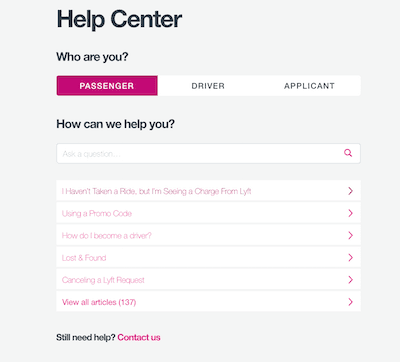
The old Help Center organized articles by user type: passenger, driver, or applicant. It did not start with the problem a person was trying to solve.
APPROACH
Learning what people needed
I recruited active drivers and passengers for usability tests so I could watch them use the current Help Center. Only three people made it to the sessions, but they gave us useful and honest feedback about where the experience broke down.
I worked with the Voice of Customer team to understand why people contacted support. I wrote job stories and mapped each outcome to the best next step, whether that was an in-app flow, an article, or the contact form.
Cleaning up the content
During the move to Zendesk, I audited the existing Help Center and the internal macros that support reps used. I looked at article quality, survey feedback, and macro usage so I could simplify the library and create a more useful taxonomy.
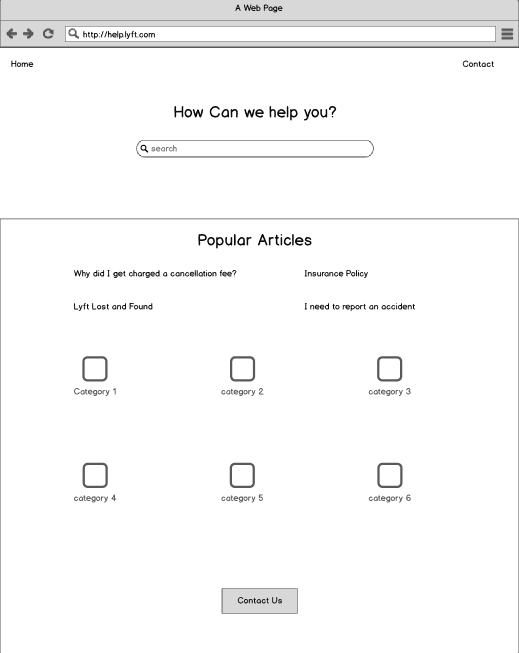
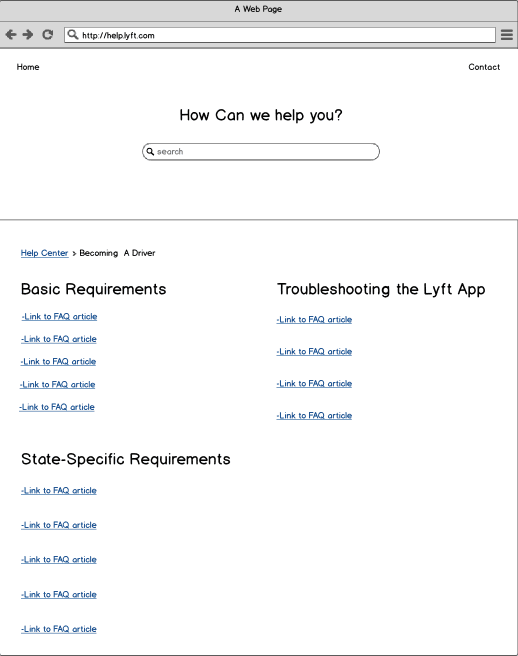
Zendesk’s ready-made themes could not handle the number of categories we needed. I worked with a product manager on the site architecture and Balsamiq wireframes, then partnered with the design team as they built a custom theme and tested the new content.

Outcome
The result
The new Help Center gave Lyft a more reliable support foundation and a clearer self-service path for riders and drivers. It organized help around the issue at hand, not a person’s role.
It also gave the team a better way to connect customer feedback, content decisions, and product design while Lyft was growing quickly.
REFLECTIONS
What I learned
The launch involved more than publishing a new site. I spent time testing across devices, redirecting old links, and adding conditional routing to the contact form. The work taught me how much a support experience depends on the details behind the scenes.
This was one of my first close partnerships with a product design team. I learned to ask for user feedback early, share it often, and delegate when I was trying to take on too much.